Thursday, September 28, 2017

Research Indicates Incorrect Home Insurance Could Be Costing Britons £125m A Year

A new analysis of government statistics undertaken by a specialist home insurance provider highlights the fact there could be over three million unoccupied homes in the UK at present, with 1.3m properties without the correct home insurance.


As of April 1st 2016, there were 23,928 properties recorded as vacant and owned by local authorities in England. This number has declined significantly since the turn of the millennium, where local authorities in England recorded owning 87,200 vacant dwellings.

Of the 24,000 empty buildings currently owned by Councils in England, 3,152 are properties within highly desirable London Boroughs, which have been vacant for over six months and are not currently available for letting on the property market.

Figures published in August 2017 by the Resolution Foundation have shown that between the years 2000 and 2014, the number of people with privately-owned, multiple properties in the UK, has risen from 1.6m to 5.2m. The analysis suggested that the majority of these owners were not landlords, with perhaps as many as 3.4m people having an empty property that was not being used to let.

During 2017, the team at specialist home insurance company www.coverbuilder.co.uk, have noticed a large increase in the number of home insurance policies taken out for properties with no occupants and not intended to be sublet.

Rob Rushton, Head of CoverBuilder said:

‘‘In recent months we have seen a significant rise in the number of home insurance policies that require insurance for an unoccupied property. A second home can be acquired for various reasons: through inheritance, people working abroad, properties purchased for holiday homes, or purely used as an investment’’.

Insurance providers will define ‘unoccupied’ as a building that is vacant for over 30 days. Unoccupied properties are at much higher risk of damage, particularly as a result of vandals and thieves.

CoverBuilder surveyed 574 owners of unoccupied properties and were alarmed to find out that only 219 (38%) were protected with insurance that covered unoccupancy.

Damian Downey of CoverBuilder said:

“The number of properties incorrectly insured is concerning. With the statistics that we’ve been analysing, there could be 1.3m empty houses with insufficient home insurance across the United Kingdom. If 12% of UK houses are unoccupied for over 30 days, then in line with current, domestic house insurance claim statistics, £125m is potentially being dismissed due to insufficient insurance each year.

He continued

“As one in ten of the UK adult population is a multi-home owner, I would urge anyone with an unoccupied property to check their policy documents and make sure that they have the correct home insurance cover for their property’’.

For more information on unoccupied house insurance, visit www.coverbuilder.co.uk/unoccupied-property-insurance


The post Research Indicates Incorrect Home Insurance Could Be Costing Britons £125m A Year appeared first on http://ukconstructionblog.co.uk

Wednesday, September 27, 2017

BENTOSHIELD – THE IDEAL MEMBRANE FOR BELOW GROUND STRUCTURES

Bentonite, a clay substance which is often generated from the alteration of volcanic ash, is renowned for its water absorption. These properties make it a valuable material for a wide range of uses and applications, particularly as a waterproofing material in construction of belowground structures such as basements.

Bentonite’s availability in the marketplace in various product forms is well-known – it’s been around for hundreds of years. However, the appearance of natural sodium bentonite in Sika BentoShield MAX LM, a fully-bonded, needle-punched membrane and integrated polyethylene flexible laminate, represents a unique offering. The polymer-modified product, which is applied to external surfaces of belowground structures exposed to ground water, is the only bentonite system that’s BBA-approved to BS EN 1928:2000 standard relating to flexible sheets for waterproofing.

Superior

The sealing technology of Sika BentoShield MAX LM combines the superior swelling performance of the sodium bentonite with high strength polypropylene geotextiles. The two geotextiles are interlocked by a needle-punching process forcing fibres from the non-woven layer through and beyond the woven layer. This process forms a physical link between the geotextiles and locks the bentonite granules in between, keeping them contained. The system is finished with a polyethylene membrane which is laminated to the back which gives an additional level of protection.


Fully Bonded

During installation, the woven geotextile layer bonds to the fresh concrete due to the non-woven layer that is pulled through and beyond from the needle punching process.
When the polymer-enhanced natural sodium bentonite granules get wet they form a dense waterproof gel protecting the structure.

Sika BentoShield MAX LM is designed for use in below ground construction. It differs from other BBA-accredited geosynthetic clay liners as it contains specially formulated polymers to enhance performance in contaminated land with a high salt concentration. As well as basements, it is used in cut-and-cover tunnels, backfilled walls and in a variety of more demanding applications, depending on whether water is to be kept in or out.

The seams for vertical applications of many bentonite membranes are vulnerable to failure. Sika BentoShield MAX LM laps, however, are sealed with a tape to provide a watertight solution as well as protect against debris and water intrusion during backfilling the system. The seams on horizontal sections can be lapped and protected with a bed of paste created by mixing BentoShield granules with water. Alternatively, tape can be used on higher risk sites.


Secure

Sika BentoShield MAX LM can also be post-applied to concrete structures where pre-applying is not possible. The membrane is securely held in place with a robust fixing system.

Tested and approved to the latest industry standards, Sika provides a 10-year guarantee or 15 when it is used as part of a dual system from Sika.

Sika also provides, free of charge:

  • Full specification and detailing support
  • Sika tool box talk training
  • Site support and inspection

Easy to install, flexible and robust, Sika BentoShield MAX LM doesn’t require a primer or protection board. Its ability to mechanically bond with the concrete, which in turn virtually eliminates water tracking in the event of damage, makes it the ideal membrane for belowground structures dependent on retaining long-term watertightness.

For more information visit: http://www.sikawaterproofing.co.uk/products-systems/sika-bentoshield-max-lm/


The post BENTOSHIELD – THE IDEAL MEMBRANE FOR BELOW GROUND STRUCTURES appeared first on http://ukconstructionblog.co.uk

Thursday, September 21, 2017

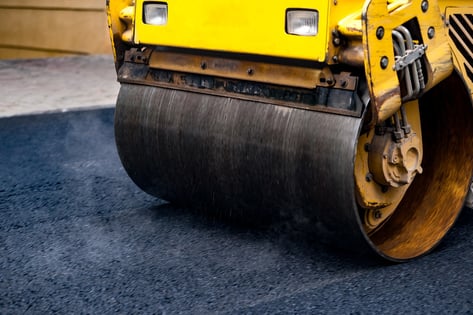
Q&A With The Asphalt Experts At Wolf Paving

blog-asphalt.jpgDo you have asphalt questions? We have asphalt answers! We sat down with a few of the experts at Wolf Paving to discuss this past season.

We talked with Tyler Bohachek (Project Manager), Craig Lemke (Project Manager), and Karen Homewood (Estimator) to get the scoop on what sets Wolf Paving apart in this industry.

They talked about everything from ideal paving weather to what it takes to hire a commercial paving company and what kind of projects you should hire that company for.

1. What are the various types of paving services available and with the current market, which are most commonly used?

Tyler & Craig: Wolf is able to build a project from (below) the ground up, offering a wide variety of paving services. We are able to completely rebase, rough grade, fine grade, and pave almost any size project. On top of that we also offer full asphalt removal and replacement services. Most commonly we remove the old asphalt, fine grade, and pave.

Karen: Remove and replace, milling, pulverizing, overlaying- I have had good luck with milling down and overlaying for many of my Property Managers/Customers who don’t have the budget for a complete removal.

2. What types of services / products are new to the industry?

Tyler & Craig: Porous asphalt is one of the newest and most innovative products on the market. The idea behind porous mix is to let water drain through the mat, reducing the need for catch basins and drain tiles. Another advancement being used in the asphalt industry is the use of Geo-grid. This product is a base stabilizing mesh that is able to turn soft base into a hard pavable surface. It works as a sort of underground bridge that holds the new base material together so that underlying unstable soils do not affect the pavement that will be laid on top.

3. Do you need to have a big project in order to hire a commercial paving company?

Tyler & Craig: There is no job too big or too small when considering a commercial paving company. One of the major benefits of hiring a commercial paving company is the quality of work you will receive. With the various types of machines that are used in commercial paving, the project gets done professionally and efficiently to ensure integrity along with sustainability for your investment. Whether you’re trying to pave a driveway at home, or a parking lot, utilizing a commercial paving company will provide you with peace of mind knowing your project is being completed correctly the first time. With a commercial paving company, you will have constant communication from start to finish. You will have transparency with Estimators, Project Managers, along with highly trained Grading and Paving Foreman every step of the way to guarantee you are aware of the various phases in regard to your project. With the reputation that a company receives based on reviews, you will find it comforting knowing that with a commercial paving company, there is a lot of pride that goes into the work. A large-scale project is not needed to hire a commercial paving company. Wolf offers services to almost all size projects. From the smallest driveways to projects such as paving University Avenue in Madison, Wolf is able to handle them with professionalism and timeliness.

Karen: We do driveways, parking lots and roads. The positive about choosing Wolf Paving is that we have our own asphalt plants and control over the mix and designs.

4. With the current draught in Wisconsin, does weather (wet or dry) have any affect on the construction or paving industry?

Tyler & Craig: When considering outdoor contractors, weather always plays a part in the preparation and execution of various scopes of work. Sometimes due to inclement weather you may run into a situation where your project schedule gets pushed around. This can be irritating to most, when considering deadlines and layouts. However, it is important to realize that unforeseen conditions do exist. A reputable company would rather wait for ideal conditions to complete the work awarded so that you are getting the most out of your investment without any setbacks. Weather does play a large role in all of our projects. Paving more so than any other sector of construction is extremely weather dependent. We are somethimes unable to paving wet surfaces, whether they are binder lifts of asphalt or stone, and still provide a quality product. Therefore, any and all projects are heavily weather dependent.

Karen: We need to address this every year with either too much rain or not enough. We consistently address each issue straight on using all our expertise to go above and beyond. So, no weather does not affect us.

5. What is the turnaround time for a commercial paving job in the current marketplace?

Tyler & Craig: When considering the amount of time it takes for a paving project to be completed from the point of signing the sales contract to the final product, a few different factors need to be considered.

  • Size of project.
  • Time of season when project will be completed.
  • Weather conditions.

In the perfect situation, the average project can be completed within a week from contract signing. From getting the underground utilities marked, the targeted area prepped and graded, the asphalt put in place, and allowing proper curing (72 hours) of the finished product. However it is important to understand and remember that size, time, and weather have a critical impact on any project when its in regards to outdoor construction. Turn around for a commercial job is hard to pin down as far as an exact number of days. It all depends on the size and scope of the project as well as the weather as stated above. It is also dependent on the time of year that the project is set out for bid. We cannot pave in the winter so projects that are bid in January won’t get paved until the spring of the year.

Karen: It all depends on the project. If it’s a mill and pave-3 days, if it is a reconstruction, it could take weeks depending on how we need to phase it.

6. What should a commercial property owner look for in a paving contractor?

  • Reputation
  • Quality of Work
  • Quality Mix (Innovation)
  • Bonded\Insured
  • Competitive pricing
  • Local
  • Integrity Safety
  • Communication
  • Leadership
  • Efficient
  • Whatever it takes attitude.

Tyler & Craig: A property owner should be looking for a good reputation as well as a contractor that is able to control the type of mix that is being laid on their project. Wolf having their own asphalt plants is a huge bonus to each customer because we know exactly what goes into each mix, unlike some of our competitors that simply purchase mix from outside sources. We are able to suggest the best mix for each project and ensure that it is actually being used in that project.

Karen: Years in business, reputation, word of mouth/references, products and service.

Other blogs to look at before choosing an asphalt contractor:

If you have any questions about the benefits of asphalt paving or are interested in a free paving estimate, please contact us today!

With 75 years of asphalt paving experience, from highways to driveways, we are your local source for all of your asphalt paving needs. Wolf Paving offers professional paving services from Milwaukee to Madison, and everywhere in between, including all areas around: Sun Prairie, Oconomowoc and Waukesha.

New Call-to-action


The post Q&A With The Asphalt Experts At Wolf Paving appeared first on https://www.wolfpaving.com/blog

GOVERNMENT INTERVENTION ALONE WON’T SOLVE CONSTRUCTION INDUSTRY’S PAYMENTS PROBLEMS

The Specialist Engineering Contractors’ (SEC) Group is calling on the Government to solve the UK construction industry’s long-standing and crippling payments problem, labelling the current cashflow position as “critical”.

In a recent article, the SEC Group – which represents SMEs in the construction engineering sector – warns that its members are increasingly being propped up by their directors’ wallets as an interim cashflow ‘solution’.

They cite Funding Options figures that show directors lent their construction businesses £38 million in 2015/2016, up from £29.7 million in 2013/2014 – a jump of 28 per cent in just two years.

Unsurprisingly, the SEC Group labels this rise as “unsustainable” and has urged the Government to introduce legislation to solve the problem.

We agree wholeheartedly with the SEC Group – the cashflow issue has affected growth of construction businesses of all shapes and sizes for too long and needs to be addressed urgently.

However, we feel that while the Government has a role to play in improving B2B payments in the industry, businesses themselves can do much more to take greater control of their finances.

We’ve partnered with Invapay, an Optal company, to make this easily achievable. Our unique proposition – a combined full-service payment solution – provides construction businesses with a quick and effortless way to manage their payment process and maximise working capital benefits.

With Open ECX and Invapay, businesses are able to make their payment processes simple, streamlined and effortless from the moment a payment application is made right through to the point that it is paid.

Our cloud-based paper-free WebContractor solution manages the first half of the process, giving subcontractors and suppliers the ability to submit invoices quickly and easily through an online portal. The automated service then processes the application, sending verification notices emails to the applicant and the QS, allowing invoicing authorisation to be granted hassle-free.

At this stage Invapay’s payment solution comes into play. With no changes to processes and systems, Invapay’s business-tobusiness payment platform allows businesses to optimise their payments to suppliers and subcontractors.

Through Invapay, businesses can take greater control of their cash flow – across working capital, credit lines and third party funds – ensuring long term cash flow benefits for buyers and subcontractors.

For more information and to download a free payments guide visit: http://openecx.co.uk/maximising-payments-maximising-cash-flow/


The post GOVERNMENT INTERVENTION ALONE WON’T SOLVE CONSTRUCTION INDUSTRY’S PAYMENTS PROBLEMS appeared first on http://ukconstructionblog.co.uk

Wednesday, September 20, 2017

https://t.co/uSEulrKzuD thanks for following us! Have a great day :) #pavingcontractor


from Twitter https://twitter.com/drivewaysuk

September 20, 2017 at 09:39AM

Going Digital for the Digital Enterprise

As engineering firms move toward developing a digital strategy, a new phrase – going digital– will resonate with engineering, architectural, and construction professionals, as well as infrastructure asset owners, is now part of the infrastructure lexicon. Going digital refers to the business transformation being realized as infrastructure professionals take advantage of a connected data environment by leveraging a cloud computing platform that digitally connects and converges people, processes, data, and technology to yield significant benefits.


In its broadest sense, going digital means moving data that used to be locked in application-specific files or even paper documents, and making the data inherent in these files and documents available to be consumed and analyzed by other software and processes. Through going digital, 3D digital engineering models created during the planning and design phase can provide the interactive 3D environment for operations and infrastructure asset performance modeling, leveraging cloud computing, predictive analytics, and operational data from the Industrial Internet of Things and other sources. These models can now be referenced throughout the full lifecycle of an infrastructure asset, improving performance, safety, and sustainability.

But what about an infrastructure asset that does not have a digital engineering model? Reality modeling, an exciting technology that involves the process of capturing existing facilities and site conditions with the use of digital photographs and/or point-cloud data – enables the rapid creation of 3D, engineering-ready mesh representations of the existing, as-operated conditions. The process is simple: overlapping photographs taken with a camera either handheld or mounted on a UAV are uploaded to a cloud processing service that automatically reconstructs the 3D model for use in engineering applications. Further detail and accuracy can be added to the model through close range photos or point-cloud data from laser scanners.


In the past two years, reality modeling has gone from being a specialty service to a mainstream process by engineering and construction firms, and by owner-operators of infrastructure assets. The speed and ease of reality modeling now makes it possible to do nearly continuous surveying to monitor construction progress and as-operated conditions. And, the resulting 3D model components can be classified and hyperlinked to engineering models, documents, and specifications (the ET or engineering technology), historical operations data, (the IT or information technology), and real-time IoT sensors (the OT or operations technology). By going digital, the digital engineering model, whether built from scratch through design and engineering application software, or created from existing conditions through reality modeling, can deliver new value as an immersive environment to access open and live information for visual operations of infrastructure assets—bridging ET, IT, and OT—and with that visibility comes the empowerment to improve asset performance.


Making the Digital Enterprise Real

A going digital strategy begins with information technology and seeks convergence with operational technology. As such, realizing the digital enterprise would involve adding engineering technology to complete the convergence. While going digital means different things for different enterprises, in our industry, users of infrastructure engineering can take advantage of new form factors for connecting and computing in their pursuit of it. For many of our large users, the strategy is an opportunity to improve their business model for better asset performance and capital project cost reduction.

An effective digital strategy can realize benefits through all phases of the infrastructure lifecycle. In the CAPEX phase, a digital workflow can take advantage of better decision making with immersive design and collaboration in construction. For OPEX, the value of digital engineering information provides performance improvement opportunities for owner-operators seeking to maximize their assets. The core value is reducing TOTEX (total expenditure) as owners seek to manage and mitigate the risk associated with large capital projects and the ongoing maintenance over time. Owners require information from all phases of the project lifecycle to be useful in the asset management or maintenance management systems when the asset reaches handover, which is fully realized through a digital strategy.


For engineers, going digital can mean new business opportunities, such as conceptioneering, the process of quickly creating multiple iterations of a conceptual infrastructure design model with engineering content, at the beginning of a project, to constructioneering, the process of bringing engineering data directly to the field to drive construction workflows and equipment, during construction and into operations. It can also mean inspectioneering, which is the process of bringing as-operated and continuously surveyed, engineering reality meshes into digital engineering environments, enabling engineers to inspect and evaluate infrastructure assets from any location. And, lastly, to productioneering, which is the process of leveraging the digital engineering model, with live and open connections to IT and OT data, and predictive analytics, as an immersive environment for visual operations, decision support, and performance improvement. These are all examples of going digital, and Bentley is providing the solutions for our users to get there.


The post Going Digital for the Digital Enterprise appeared first on http://ukconstructionblog.co.uk