Wednesday, January 25, 2017

TIMco LAUNCHES INNOVATIVE NEW CAVITY WALL FIXING

TIMco, one of the UK’s largest independent wholesale suppliers of screws, fixings and power tools accessories, has introduced the innovative cavity wall fixing, Zip-Fix, to its newly extended range of products.  The fixing is an ideal heavy duty hollow wall anchor that’s suitable for use in plasterboard, concrete block, cavity walls and ceilings.

The new product, one of more than 700 new items in the latest TIMco brochure, is available in bags of ten and provides the ideal anchor for hanging radiators, TV brackets and cabinets.  The Zip-Fix anchor can be used on a number of substrates including plasterboard (12.5 and 25mm thick) as well as 15mm dense board and block and, with safety factors applied, is capable of holding weights between 30 and 60kg.

Simon Midwood, Managing Director of TIMco, comments; “This is an exciting new addition to our range and illustrates the increasing depth of products we now offer.  This product has been developed to provide merchants and their customers with a quality and easy to use fixing that’s capable of acting as a plasterboard fixing in home, office or industrial spaces.  We’re excited to offer it to our customers and to be continuing to build the range in the future.”

Zip-Fix is designed to be used in four easy steps:

  1. Drill – make a 13mm hole in the substrate (with a 50mm cavity clearance behind the substrate)
  2. Push – face the thumb tab upwards, insert the metal toggle through the hole so it pivots down behind the substrate.
  3. Zip – Zip the nylon collar towards the wall so that it sits into the drilled hole, then snap off the nylon arms.
  4. Fix – Secure the fixing with an m6 screw into the threaded part of the Zip-Fix and tighten until secure.

Earlier in 2017, TIMco released details of its new biggest ever catalogue that contains more than 5,500 products including; advanced wood, multi-purpose, self -drilling and self-tapping screws as well as roofing and construction screws.  This is in addition to an extended range of fixings and fastenings as well as a comprehensive range of supplementary products such as industrial tapes, protective films as well as security solutions.

TIMco is head quartered in Nantwich, Cheshire, imports and supplies product lines from around the world to distributors throughout the UK, Ireland and Europe.  The company was established in 1970 and now employs 110 members of staff from it offices in the UK, Ireland and Taiwan.  For more information, visit www.TIMco.co.uk.


The post TIMco LAUNCHES INNOVATIVE NEW CAVITY WALL FIXING appeared first on http://ukconstructionblog.co.uk

Tuesday, January 24, 2017

A brief guide to industrial doors, from sliding tents to high speed doors

The field of industrial doors includes many different models, and each one is conceived for specific uses and have special features.

Let’s see some of the main types of industrial doors, their peculiarities and their most common applications!

  • Sectional doors: one of the main peculiarities of these types of doors, which are also used in residential contexts, is their vertical opening. The fact that they open vertically brings a big advantage, since this permits to save space both in front and behind the door itself. Also for this reason sectional doors are very versatile and can be used in various different contexts.

Sectional doors can be both manual and motorized (in this case they can be equipped with remote automatic control) and the safety of the lifting system is guaranteed through special safety devices.

  • High speed doors: this model is used in those spaces where it in necessary to open and close the door very quickly. The quickness of the system that characterizes the opening of high speed doors brings many advantages: first of all, it permits to save energy and maintain the temperature inside a given space; moreover, using this type of doors you can separate different processes inside the same building, which helps improving productivity.

High speed doors are also appreciated because they do not require special maintenance and are easy to install.

  • Strip curtains: these inexpensive doors are made of PVC and are very durable and versatile. Perfect for cold store areas, strip curtains are used for the opening of large warehouse. They reduce temperature loss and allow the passage of people and machines.
  • Folding doors: the perfect model if you need robust and wide closures, folding doors can be personalized and equipped with windows to improve visibility.
  • Sliding tends: this model is notably appreciated because it is a cheap solution for both large and small spaces.
  • Fire doors: it is necessary to use this type of doors in all of those spaces where there is a high fire risk. Fire doors are an important protection for both people and goods and need to be certified and built in accordance to specific norms.
  • Flap doors: a cheap solution that you can use when you need to isolate various rooms inside the same building but you do not want to prevent people and machines to move easily from one room to the other. Made of PVC, flap doors are resistant and flexible.

These are some of the types of industrial doors that you can find on the market. Choose the one you prefer according to your needs and to the field of application!


The post A brief guide to industrial doors, from sliding tents to high speed doors appeared first on http://ukconstructionblog.co.uk

Sunday, January 22, 2017

New national Vulnerable Road Users course for construction industry

CLOCS commends new national Vulnerable Road Users course for construction industry

Considerate Constructors Scheme creates e-learning course on Best Practice Hub to achieve greater awareness of vulnerable road users

London, United Kingdom, 18 January 2016: The Best Practice Hub – the construction industry’s free to access online platform for sharing best practice – has produced an e-learning course about Vulnerable road users.

Launched on 9 January, the course is designed to increase knowledge and understanding of the risks construction activity can pose to vulnerable road users and provides practical methods which can be adopted to minimise these risks. It is available to all registered Best Practice Hub users.

A fundamental part of the course is to provide participants with an understanding of CLOCS – the national standard for Construction Logistics and Community Safety – and how it can be adapted for any type of construction activity across the UK.

Other learning sections include current road safety legislation, the Highway Code and details of other important road safety programmes including FORS – the Fleet Operator Recognition Scheme.

The course, which is eligible for CPD, has already received a huge uptake, with hundreds of individuals from Scheme-registered sites, companies and suppliers completing it.

To drive higher standards nationally, the Scheme has also introduced a dedicated section about the CLOCS Standard on the Best Practice Hub as well as additional questions about CLOCS in the 2017 Monitors’ Checklist.

Considerate Constructors Scheme Chief Executive Edward Hardy said: “All types of construction activity can involve potential risks to vulnerable road users. It is, therefore, essential that the industry knows and understands these risks and does all it can to minimise them, both for the general public and the workforce.

“The Vulnerable road users e-learning course and section about the CLOCS Standard on our Best Practice Hub provides an easily accessible and practical way for everyone within the industry – including site managers, contractors, suppliers and clients – to raise safety standards for every road user and pedestrian affected by construction vehicles.”

CLOCS Project Director Derek Rees commented: “The CLOCS team commends the Considerate Constructors Scheme for creating the Vulnerable road users e-learning course and providing a dedicated CLOCS section on the Best Practice Hub. Both resources provide an invaluable way to help raise awareness of the daily risks presented to pedestrians and cyclists and how the industry can effectively manage the impact vehicles accessing sites have on the local community and workforce.”

Click here to visit the Best Practice Hub.

Click here to take the Vulnerable road users e-learning course.

Click here to view the CLOCS section.


The post New national Vulnerable Road Users course for construction industry appeared first on http://ukconstructionblog.co.uk

Thursday, January 19, 2017

5 tips for tackling a listed property restoration in 2017

5 tips for tackling a listed property restoration in 2017

If you have been thinking of getting your listed property spruced up, whether it’s an extension or re-structuring the foundations, there are fundamental things that you will need to consider before.

Sarah Khan, a member of the Society for the Protection of Ancient Buildings (SPAB) and Jonathan Clark who is a member of the RIBA conservation group share their top tips on approaching a listed building restoration.

  1. Be particular with restoration scale

According to RIBA accredited Conservation Architect Sarah Khan if you plan on doing work to both the interior and exterior of the building, you’ll need to apply for listed building consent and planning permission. If your listed building is in a conservation area, you’ll need to take this into account.

  1. Restore for reasons of practicality not trends

Late last year it was announced that the Buckingham Palace will undergo a 10 year refit. Work will start in April 2017 and will focus on replacing 33-year-old boilers, electrical cables and pipework. The most common misconception people have is that just the façade of a property is listed says Sarah, find out everything you need to know about your property from your local council.

  1. Materials will shape how far you can restore

The restoration projects of the Elizabeth Tower (Big Ben) includes using original gold paint for the face of the clock, prepare yourself for the fact that the use of cheap, modern materials will often not be possible, advises Sarah.

  1. Surround yourself with the right craftsmen and architects

The biggest challenge we faced was undoubtedly dealing with the conservation officer. It was a process of negotiation and convincing them that our proposals would materially enhance the building and bring it into the 21st century in a sympathetic way – says Jonathan Clarke, founder of Jonathan Clark Architects.

  1. Strike a balance between replica and restoration

Your restoration plans should clearly highlight how you will be preserving your listed building, it could be anything from not chopping down an old tree in your garden to using 10,000 bricks from original building (part of Battersea Arts Centre restoration plan.)

Sarah and John share their experiences working with listed building restorations as part of the Hiscox cover stories campaign, read their full interview here.


The post 5 tips for tackling a listed property restoration in 2017 appeared first on http://ukconstructionblog.co.uk

Tuesday, January 17, 2017

Construction firms’ risk losing custom by playing generic music on hold

January 17, 2017 – Construction firms’ call handling standards have come into question as the result of a major new study into telephone practice.

The research conducted by audio branding specialist PHMG, which audited 185 firms in the construction industry, discovered the large majority risk losing custom by subjecting customers to generic music and audio while on hold.

Typically, waiting on hold is seen as a major bugbear but 54 per cent of construction companies still leave customers listening to nothing but generic music. A further 26 per cent subject them to beeps, while 16 per cent leave callers in silence and four per cent force them to listen to ringing.

No companies were found to employ brand-consistent voice and music messaging – viewed as the best practice approach to handling calls – less than the national average of two per cent.

Mark Williamson, Sales and Marketing Director at PHMG, said: “Call handling remains a critically undervalued element of customer service and marketing. A previous study of 1,000 UK consumers found 73 per cent will not do business with a company again if their first call isn’t handled satisfactorily.

“Therefore, it is important companies do their utmost to improve the experience. The research shows there is still work to be done in providing an experience that keeps callers engaged and entertained.

“Generic music, beeps, ringing or silence convey a message that the customer is not valued, which will only serve to compound any annoyance felt as a result of being made to wait on hold.”

The research also found 92 per cent of construction firms do not even use auto attendant messaging to greet customers who call up outside of normal working hours.

It also seems call handling standards have not significantly improved when comparing the results to a similar study conducted in 2013. The number of companies playing repetitive music has increased by 23 per cent during that period while the number using brand-consistent voice and music has stayed the same.

“The trends over the past three years suggest construction firms believe generic music is enough to keep callers entertained but this can actually have the opposite effect,” added Williamson.

“An existing, generic piece of music should not be repurposed to convey a message it was never intended to, as its characteristics may not match those of the company.

Hearing is one of our most powerful emotional senses so the sounds customers hear when they call a business will create a long-lasting impression. Every element of a music track, whether tempo, pitch or instrumentation, will stir different emotions so traders should ensure they convey the appropriate brand image.”


The post Construction firms’ risk losing custom by playing generic music on hold appeared first on http://ukconstructionblog.co.uk

Monday, January 16, 2017

Driveway Pavers

Driveway Pavers In The North East

Driveway Pavers based in the North East installing Driveways throughout Newcastle, Sunderland, Durham and Teeside.

Our specialist driveway pavers have been installing quality driveways throughout Newcastle, Sunderland, Durham and Teeside since 1980. We believe that each driveway should be unique and it should be created with a little imagination. Over the years we have developed a good eye for detail when it comes to installing driveways. No matter how small or how large your driveway our team can create a finished look you will be proud of.

large-driveway-stockton marshalls-patio- paving-sawn-versuro-durham driveway-installation-scotland Paving-Artificial-Lawn-Project driveways-10-north-east Block-Paved-Driveways-2

Huge choice of colours and textures

As technology has advanced over the years, so has the choice of products, colours and designs available. We offer a huge choice when it comes to paving blocks, finishes, colours and textures. Matching edging, manholes, kerbs are often available to match your block paving. Not only can edging add strength to the driveway, it can also have a big visual aspect when it comes to the divide between the garden and paving.

Marshalls Approved Contractors

quality-block-pavingFurthermore, our team of driveway pavers are Marshalls Approved Contractors. This ensures homeowners of quality workmanship along with the benefits of the Marshalls Product Failure Guarantee of 10 years and our 5 year Installation Guarantee.
For your peace of mind, all our pavers are qualified to a minimum of NVQ level 2 and supervisors qualified to level 3. Machine operators are qualified CPCS and NPORS operators. This ensures you that your driveway is built on foundations to current British Standards. All of our driveway pavers are employed by the company, we do NOT subcontract to other companies.

Leading Paving Brands

As well as Marshalls we work with other leading brands such as Thomas Armstrong, Bradstone, Natural Paving, Tobermore and much more.

Finance For Your Driveway Project

At this time of year, money can often be a little tight after the festive break. However, with our Finance deals such as 0% Finance and Buy Now Pay Later they can make it easier to have your new driveway installed before the summer months. Find out more about our Finance offers


Keep informed of all our latest news

If you would like to keep informed of all our latest news, offers and work. Please join our Facebook Page. 

The post Driveway Pavers appeared first on Driveways, Block Paving, Patios, Newcastle, North East | Driveway Company UK.

Government awards £1.2bn roads funding to councils

Councils across England are today finding out their share of £1.2bn local roads funding for the next financial year.

Transport Minister Andrew Jones announced funding to improve roads, cut congestion and improve journey times includes money from the new National Productivity Investment Fund, announced in the Autumn Statement and the Pothole Action Fund.

It also includes £75m which councils can bid for to repair and maintain local infrastructure such as bridges, street lighting and rural roads.

The government has today also published further information about what the funding will be spent on – the latest step in the economic plan to stimulate the economy and build a country that works for everyone.

A key part of this is putting in place improved transport links including better roads, to help people access work, school and services.

Transport Minister Andrew Jones said: “The funding we have allocated today is focused on relieving congestion and providing important upgrades to ensure our roads are fit for the future – helping to build an economy that works for everyone.

In a further effort to reduce the number of potholes the Department for Transport will begin a new innovative trial, in partnership with Thurrock and York Councils which could revolutionise the way potholes are identified and managed.

A pothole-spotter system, mounted to refuse collection vehicles, comprising of high-definition cameras, integrated navigation system and intelligent software will be deployed to identify road surface problems before they become potholes.

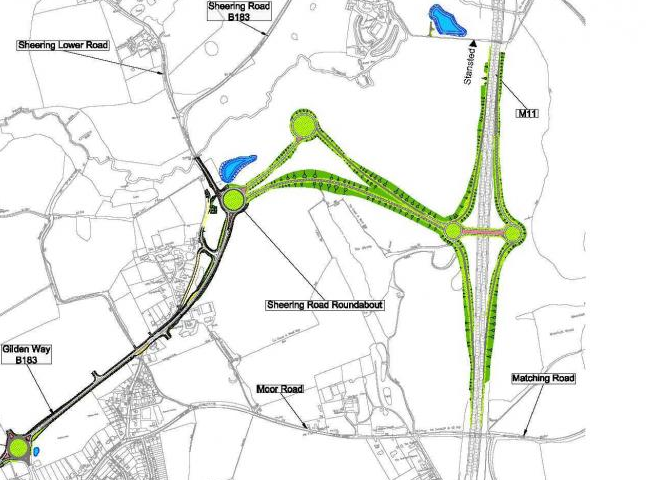
The DfT will also support plans for a new motorway junction on the M11, near Harlow in Essex. This will help to ensure the delivery of 15,000 homes and support continued growth in the local economy.
M11 junction 7a

The new junction, to be known as Junction 7A, will sit to the north of Harlow, and will cut several minutes from journeys to Stansted and Cambridge.

The scheme will provide better access to the motorway both for new residents and for the existing inhabitants of Harlow and Sawbridgeworth; plus less congestion on the existing junction 7. The project will be part-funded by Essex County Council, and could begin construction in 2019.


The post Government awards £1.2bn roads funding to councils appeared first on http://ukconstructionblog.co.uk